cardigan women ralph lauren may look like a simple shopping keyword, but behind a good cardigan is a full supply-chain process. Yarn sourcing, pattern making, sample correction, knitting, washing, button attachment, pressing, inspection, and packing all affect the customer’s first impression.
A factory cannot finish its way out of poor yarn. Fiber content, yarn count, twist, and color consistency set the foundation. If the yarn is weak, the rib may lose recovery. If the shade lot is unstable, sleeves and body panels may not match. Good sourcing prevents problems before production begins.
For women’s cardigans, yarn also affects drape. A cardigan should feel comfortable without collapsing. It should have enough body to support the placket and enough softness to feel wearable against light layers.
Pattern makers decide shoulder slope, chest width, body length, sleeve pitch, and hem balance. These choices are easy to underestimate because knitwear stretches, but stretch does not solve poor balance. If the armhole is wrong, the front can pull. If the body length is wrong, the cardigan may look awkward with common outfits.
At Heche, pattern correction is part of the practical Shenzhen factory workflow. We review samples with production reality in mind: what can be repeated, what must be adjusted, and what will cause quality issues in bulk orders.
A pullover can hide certain tension issues, but a cardigan cannot. The placket is always visible. Button spacing must be even, buttonholes must be clean, and the front edge must stay straight. If the panels are not balanced, customers will see it immediately.
The Ralph Lauren women’s navy blue cable-knit button-up cardigan sweater is a useful reference for button-front inspection. The placket, rib, and cable surface all give clues about production control.
Finishing affects size, handfeel, and surface. Washing can soften the garment but may also shrink or distort it. Steaming can improve shape but may create shine, uneven body length, or relaxed rib if overdone. A factory should measure after finishing, not only before.
Customers can notice finishing issues by laying the cardigan flat. The side seams should not twist. The hem should be level. The sleeves should match. The garment should not look over-pressed or crushed.
A useful QC checklist includes measurements, shade matching, placket alignment, button strength, yarn ends, stains, rib recovery, label placement, packing method, and carton condition. Vague inspection leads to vague results. Specific standards create repeatable quality.
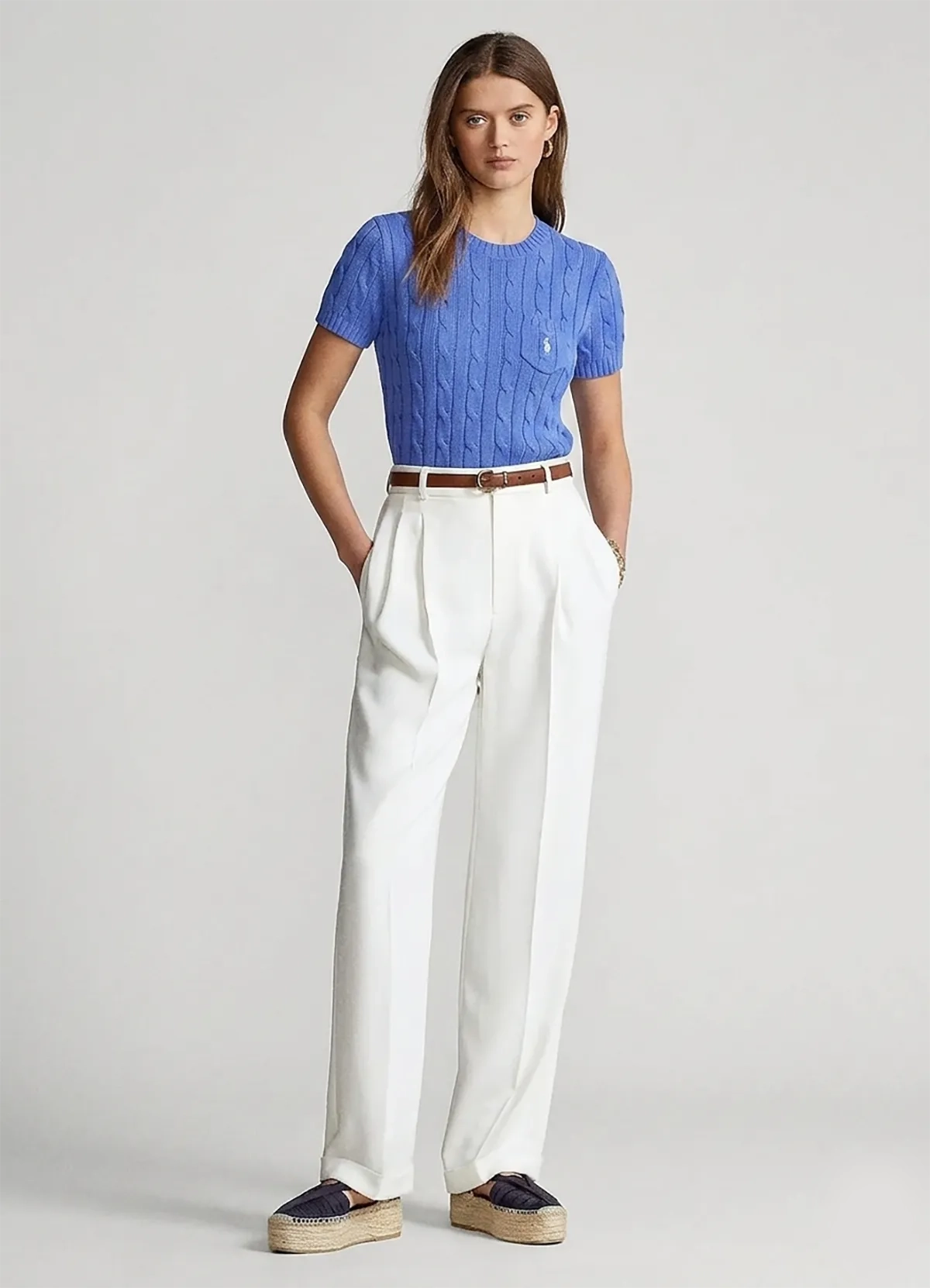
Related knit products such as the Polo Ralph Lauren blue cotton sweater with short sleeve and the Polo Ralph Lauren autumn yellow cable-knit polo shirt show how surface clarity, color, and fit depend on the same supply-chain discipline.
A better cardigan women ralph lauren purchase is one that reflects good process, not only good styling. For retail customers, that means checking fit and finishing. For boutique buyers, it means asking suppliers for sample records, measurement tolerance, and final QC evidence.
Good production notes turn a successful sample into repeatable bulk. If the approved cardigan has a specific placket width, button spacing, and rib tension, those details should be written down. Workers and inspectors need concrete standards, not only a reference photo.
During bulk production, the factory should pull pieces from different stages, not only inspect the final carton. Early checks catch shade variation, incorrect measurements, and weak button attachment before hundreds of pieces are finished. This saves time and protects the buyer’s margin.
For customers, the same idea becomes a buying habit. Do not judge only the front image. Check measurements, fabric notes, product close-ups, and return policy. A cardigan is simple enough to wear often, but complex enough to deserve careful evaluation.
That is why supply-chain discipline matters even for a classic sweater category.
The same discipline applies to small orders and large orders. Even if the quantity is modest, the supplier should still confirm measurements, color, label placement, and packing method. Small batches are not an excuse for loose standards; they often require closer communication.
For supplier communication, photos should be labeled clearly: front, back, side, inside seam, placket close-up, cuff, hem, and packing. This creates a record that both buyer and factory can discuss. When a correction is needed, everyone can point to the same detail instead of relying on vague comments.
Good documentation is not paperwork for its own sake. It is how a simple cardigan becomes a repeatable product.
For repeat orders, keep one approved sample sealed as a reference. It helps compare future production for shade, handfeel, measurements, and finishing consistency, especially when the same style is reordered months later.
 EN EN
EN EN  ES
ES
 FR
FR
 DE
DE