polo ralph lauren cardigan womens often brings customers who are comparing several similar-looking cardigans and trying to decide which one is worth buying. When the product photos look close, value comes from hidden work: stable yarn, accurate patterns, controlled finishing, and inspection standards that catch small defects before shipping.
In a Shenzhen clothing supply chain, a cardigan starts with more than a sketch. The factory reviews yarn type, gauge, panel measurements, button size, placket width, rib tension, washing shrinkage, and packing method. These choices affect how the cardigan arrives, how it fits, and how it behaves after the first few wears.
For customers, the mistake is treating all button-up knitwear as equal. Two cardigans can share the same color and similar cable texture, yet one keeps its shape and the other grows tired at the cuffs. The difference is usually not magic; it is sample correction and production discipline.
A women’s cardigan should not be judged only by chest width. Sleeve width, armhole depth, shoulder slope, and body length decide whether the cardigan feels comfortable. If the body is too short, the front may lift when buttoned. If the shoulder is too wide, the cardigan can look sloppy even when the size label seems correct.
When we review samples, we ask whether the cardigan works open and closed. Open wear needs front panels that fall evenly. Closed wear needs button spacing that does not pull. A good buyer asks for both views because customers will wear the garment both ways.
The front placket is one of the fastest ways to judge quality. A straight placket suggests good panel balance, stable linking, and careful pressing. A wavy placket may signal uneven tension or inaccurate finishing. Buttonholes should be dense and neat; thin buttonholes can stretch and make the cardigan look older than it is.
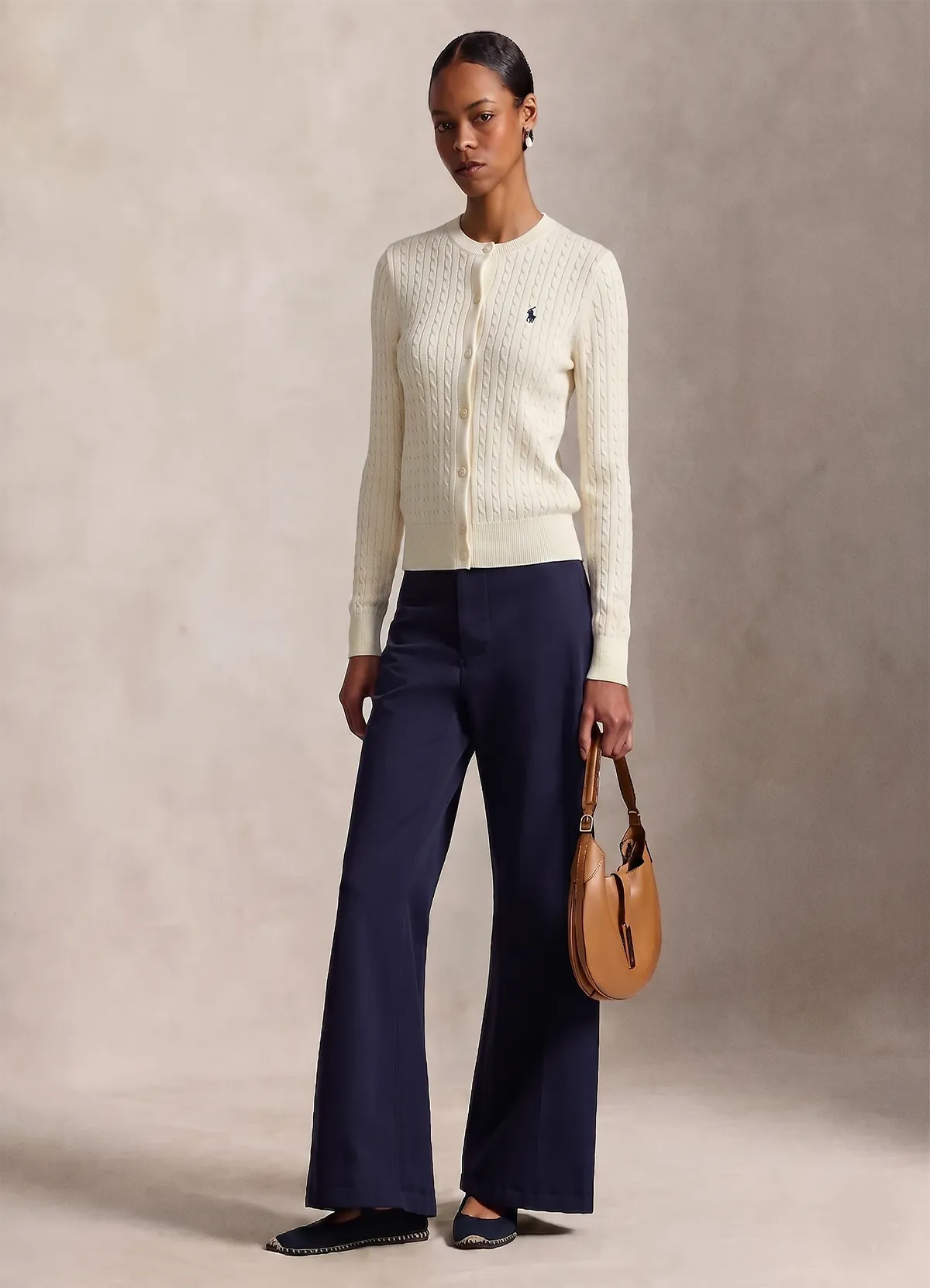
The Ralph Lauren women’s navy blue cable-knit button-up cardigan sweater gives a clear button-front reference. Darker knitwear lets customers see the outline and placket rhythm without distraction, which is useful when comparing fit and construction.
Softness is pleasant, but it should not replace structure. A cardigan for daily wear needs enough recovery at the cuff, hem, and neckline. A travel cardigan should fold without deep marks. A piece for office wear should hold a smoother front line. These are different use cases, and they require different yarn and finishing decisions.
Factories control these results through stitch density, washing temperature, steaming time, and measurement tolerance. If the sample shrinks too much after washing, the pattern must be corrected before bulk production. If the rib relaxes too quickly, the yarn or knitting tension needs review.
Looking at a related knit like the Polo Ralph Lauren blue cotton sweater with short sleeve can train the eye. Notice shoulder placement, surface clarity, color evenness, and how the fabric sits without buttons. Then return to the cardigan and inspect the extra challenges created by the placket and rib.
Color also changes perceived value. The Polo Ralph Lauren autumn yellow cable-knit polo shirt shows how a strong shade demands cleaner production. Bright or warm colors make shade inconsistency easier to see, so factories must control dye lots and panel matching carefully.
Retail customers should ask whether the cardigan fits the way they will actually wear it. Boutique buyers should ask for measurement specs, fabric composition, sample photos, and QC standards. Private-label clients should define acceptable tolerance for body length, sleeve length, placket width, and shade variation.
The best polo ralph lauren cardigan womens choice is the one where design and production agree. It should look classic, feel comfortable, and keep enough structure to survive real use. That is what separates a reliable knit from a product that only photographs well.
Product photos usually show the cardigan at its best: steamed, pinned, lit well, and styled with care. A buyer should mentally remove that support and ask how the piece will behave after shipping. Will the placket still look straight? Will the cuff recover? Will the color still look consistent in daylight? These questions are more useful than asking whether the photo looks premium.
For sourcing teams, keep a short record of sample changes. If the first sample had a loose hem and the second sample corrected it, that note should follow production. Otherwise the same defect can return in bulk orders.
A good product listing should also tell the truth about weight. Lightweight, medium-weight, and heavy cardigans serve different customers. When weight is unclear, buyers often choose by color alone and become disappointed when the garment feels different from the outfit they imagined.
 EN EN
EN EN  ES
ES
 FR
FR
 DE
DE