cable knit cardigan ralph lauren is usually a practical buying decision. Customers want to know whether the cardigan will fit well, feel comfortable, and keep its shape after real use. From the factory side, that answer comes from pattern balance, yarn selection, knitting tension, washing, button work, and final inspection.
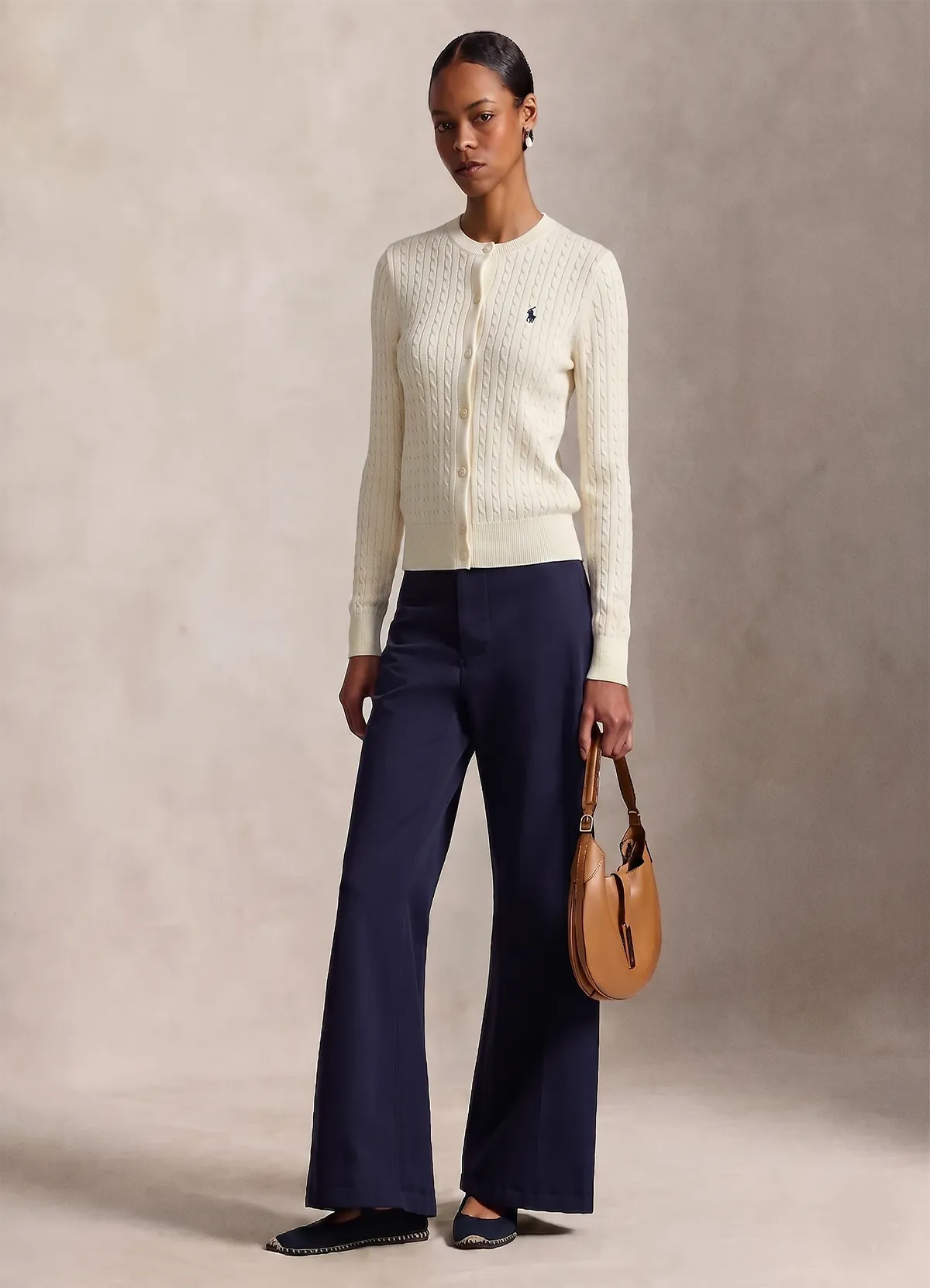
A cable knit cardigan is bought for texture as much as warmth. The raised cable lines should feel dimensional, but they should not make the body twist or the button placket wave. Customers looking at a Ralph Lauren cable knit piece are usually comparing classic style with real durability.
At Heche, we work around Shenzhen garment supply-chain details every day, including sample development, fabric sourcing, pattern correction, production follow-up, and quality checking. That view is useful when reading Ralph Lauren knitwear, because the strongest cardigan is rarely the one with the loudest styling. It is the one with controlled construction.
The handfeel should be comfortable, but softness alone is not a quality standard. Some very soft yarns stretch quickly if the gauge and finishing are loose. A better check is recovery. Gently stretch the cuff and hem, then see whether they return. Lay the cardigan flat and check whether the two front panels match. Button it fully and look for pulling between buttons.
Cable structure adds thickness, so the pattern must leave enough ease without making the cardigan boxy. We check whether the shoulder sits cleanly, whether the sleeve cap has enough room, and whether the front panels stay aligned after buttoning. If the cable pulls sideways, the size or knitting tension is wrong.
In our sample process, we review shoulder slope, chest width, body length, sleeve pitch, and hem balance together. A small change at the armhole can affect how the front sits. A loose placket can make an expensive knit look careless. For customers, the simple test is movement: raise the arms, sit down, and check whether the cardigan still hangs naturally.
Knitwear quality begins before sewing. Yarn count, fiber content, twist, stitch density, and finishing temperature all affect the final cardigan. Cotton can feel clean and breathable, wool adds warmth, and blended yarns can improve recovery. None of those choices are automatically better. The real question is whether the material matches the style, weight, and expected use.
Customers can compare visible texture with pieces such as the Polo Ralph Lauren gray cable-knit cotton crewneck cardigan. Cable lines should look clear, not loose or crushed. Rib areas at the cuff, hem, and neckline should feel firm. If the surface already looks fuzzy before wear, or if the cable pattern changes depth from one panel to another, the garment may age quickly.
Cable texture is easiest to judge on pale and mid-tone yarns. Strong daylight should show clear valleys and raised cords, not flat fuzzy stripes. On darker yarns, customers should inspect the side seams and placket because tension problems are less visible at first glance.
Finishing is where many small factory decisions become visible. Steam can improve shape, but too much heat can distort the body. Trimming should remove loose yarn ends without cutting into the knit. Packing should protect the placket and shoulder area so the garment does not arrive with deep fold marks. These are not decorative details; they affect how customers judge quality immediately.
The placket is the working center of a cardigan. It is pulled when dressing, stressed when buttoned, and highly visible from the front. Buttonholes should be clean and even. Buttons should be secure and aligned. The front edge should not ripple when the cardigan is laid flat. A wavy placket usually points to tension problems, poor linking, or careless pressing.
Inside construction deserves attention too. Look at the joins, shoulder area, thread trimming, and label placement. A useful comparison is the cream cable-knit button-up cardigan sweater, where the button line, color, and surface texture give customers several quality points to inspect before buying.
A professional inspection does not rely on one glance. We check measurements against tolerance, compare left and right panels, review shade consistency, test button attachment, inspect rib recovery, confirm label and packing details, and look for stains, snags, loose yarns, and twisting. For bulk production, those checks prevent small sample issues from becoming repeated defects.
Customers can use a shorter version at home or before checkout. Lay the cardigan flat. Button it. Compare sleeve lengths. Check the shoulder line. Stretch the cuff lightly. Look along the hem. Then try it with the type of shirt or top you will actually wear underneath. If the cardigan passes those simple checks, it is more likely to remain useful.
The best answer for cable knit cardigan ralph lauren is not always the thickest fabric or the softest first touch. A better cardigan has balanced fit, stable yarn, clean button work, controlled color, and careful finishing. For retail customers, those details create confidence. For boutique buyers or private-label clients, the same details should be written into sample comments, measurement reports, and final QC standards before production begins.
 EN EN
EN EN  ES
ES
 FR
FR
 DE
DE