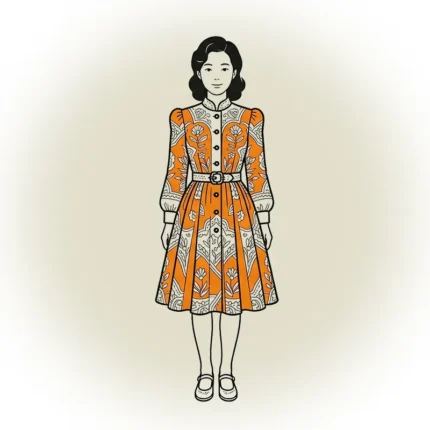
When analyzing the pantheon of fashion history, certain garments transcend their material form to become cultural milestones. Among these, the Chanel dress—most notably the Little Black Dress (LBD) introduced in the 1920s—stands as an architectural triumph and a profound social manifesto. It was not merely a shift in trends; it was a structural reimagining of the female silhouette.
To understand the enduring allure of a Chanel dress, one must look beyond the interlocking C’s and examine the precise tailoring, the disruptive use of fabric, and the underlying philosophy of “Quiet Luxury” that liberated women from the gilded cages of Belle Époque fashion.
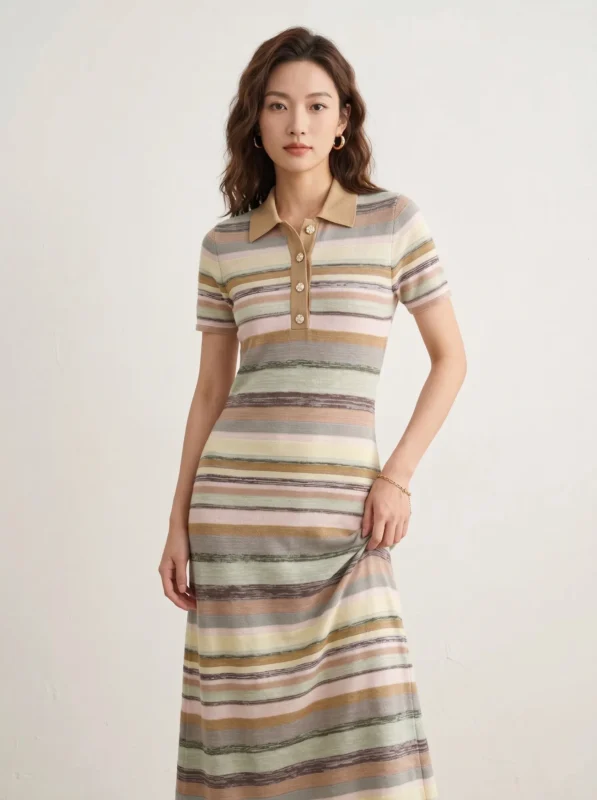
Before Gabrielle “Coco” Chanel revolutionized the atelier, haute couture was defined by restriction. Women were bound by rigid corsets, heavy underskirts, and an excess of ornamental fabric that communicated wealth but severely limited mobility. The female body was treated as a structural foundation for displaying fabric, rather than a dynamic form.
The introduction of the early Chanel dress dismantled this paradigm. Chanel’s tailoring philosophy was rooted in a radical idea: elegance must not compromise movement. She stripped away the boning and the stiff interfacing, dropping the waistline and loosening the bodice. By eliminating the corset, the Chanel dress allowed women to breathe, walk briskly, and drive cars. It was a physical emancipation wrapped in silk and jersey—a sartorial declaration that a woman’s comfort was paramount to her elegance.
A key element of the Chanel dress‘s revolutionary nature was its fabric. Chanel boldly appropriated jersey—a cheap material previously reserved for men’s underwear and sportswear. This was a scandalous choice for high society, but it was a masterclass in manipulating fabric tension and drape.
The genius lay in the garment’s “bone” or internal structure. Unlike traditional gowns that relied on rigid internal scaffolding, a jersey Chanel dress relied on gravity, masterful pattern-making, and the natural tension of the fabric to create its silhouette.
This approach birthed the very concept of modern Quiet Luxury. The wealth of the garment was not loudly announced through excessive embroidery, but quietly whispered through flawless construction and unparalleled comfort.
In October 1926, American Vogue published an illustration of a simple, calf-length, straight-line Chanel dress in black crêpe de Chine. The magazine famously dubbed it the “Chanel ‘Ford’—the frock that all the world will wear.”
Comparing a luxury dress to the Model T Ford was revolutionary. It implied that the Chanel dress was standard, accessible in its aesthetic, and brilliantly engineered. Prior to this, black was strictly reserved for mourning clothing or the uniforms of domestic staff. Chanel transformed it into the ultimate symbol of chic sophistication. She erased class distinctions; a wealthy heiress and a working-class woman could, theoretically, wear the same unadorned silhouette and look equally refined.
The narrative of the Chanel dress is inextricably linked to the women who wore it. Chanel understood early on that a brand’s history is written not just in the atelier, but in the public eye. The dress became a blank canvas for the charisma of its wearer, rather than an outfit that wore the woman.
Throughout the decades, the Chanel dress has been the armor of choice for global icons:
By associating her designs with independent, boundary-pushing women, Chanel cemented the dress as a symbol of female agency. It was never about mass production; it was about curating an elite, aspirational lifestyle.
Today, when we analyze the construction of a high-end dress, we are still speaking the language Gabrielle Chanel invented. The modern pursuit of high-end apparel construction—the obsession with the perfect shoulder line, the exact tension of a woven fabric, and the hidden architecture of a garment—all lead back to her atelier.
The Chanel dress remains the ultimate case study in fashion design. It teaches us that true luxury is found in subtraction rather than addition. By stripping away the unnecessary, Chanel revealed the essential: a strong, liberated, and modern woman.
For brands and designers navigating today’s market, the lesson is clear. Creating an iconic garment requires more than premium materials; it requires a compelling narrative, an association with aspirational figures, and a tailoring philosophy that respects both the history of the craft and the autonomy of the wearer.
Are there specific aspects of this narrative—such as the marketing psychology behind “Quiet Luxury” or how to translate this historical storytelling into modern e-commerce copy—that you would like to explore next?
 EN EN
EN EN  ES
ES
 FR
FR
 DE
DE