The cardigan sweater ralph lauren is a cornerstone of modern classic menswear and womenswear. It serves as the ultimate transitional layering piece, effortlessly bridging the gap between casual comfort and tailored refinement. However, its immense popularity has resulted in a market flooded with varying tiers of quality, replicas, and fast-fashion alternatives.
To the untrained eye, two cable-knit sweaters might look identical on a hanger. Yet, true luxury is fundamentally an exercise in structural integrity and supply chain excellence. Evaluating a premium knit garment requires looking past the brand name and examining the physical architecture of the piece. Here is an authoritative guide to decoding the craftsmanship of this iconic sweater, focusing specifically on embroidery execution, yarn density, and advanced manufacturing standards.

The Ralph Lauren Pony logo is one of the most recognizable insignias in global fashion. In high-end garment manufacturing, an embroidered logo is not merely a decorative stamp; it is a complex structural addition that tests the limits of the underlying fabric.
Stitch Density and Definition
A premium embroidered logo is defined by its stitch count. The classic Pony requires thousands of individual stitches to render the distinct anatomical features of the horse, the rider’s mallet, and the reins. When inspecting the embroidery, look for three-dimensional raised relief. The stitching should feel dense and robust to the touch. Poor-quality manufacturing utilizes a lower stitch count to save production time and thread costs, resulting in a flat, pixelated, or vaguely shaped silhouette.
Fabric Tension and Puckering
The true test of manufacturing caliber lies in how the embroidery interacts with the knit fabric beneath it. High-quality production facilities calibrate their embroidery machines to account for the stretch and give of the specific yarn. If the tension is too high, the fabric surrounding the logo will pucker or warp. A perfectly executed Pony will sit entirely flat against the chest, indicating precise tension control and the use of proper, high-quality backing materials during the embroidery process.
The defining characteristic of a superior cardigan, particularly the iconic cable-knit variant, is its weight, drape, and structural “bone.” This comes down entirely to yarn selection and knitting gauge.
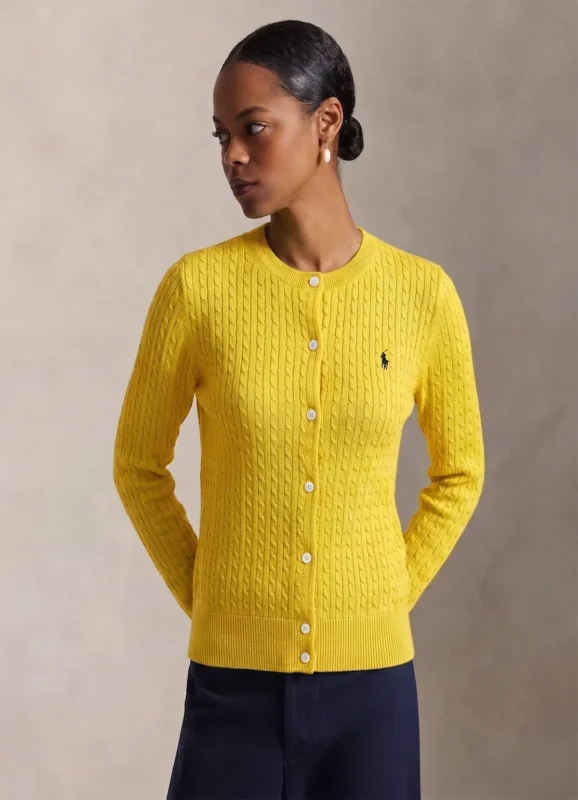
In knitwear, “gauge” refers to the number of stitches per inch. A higher gauge results in a finer, thinner fabric, while a lower gauge yields a thicker, chunkier knit. The classic cardigan sweater relies on a tightly packed, mid-to-heavy gauge to maintain the three-dimensional “pop” of the cable pattern.
When you physically handle the garment, gently stretch a section of the body laterally. A densely knit sweater will immediately snap back to its original shape. A loose, low-density knit will feel spongy, overly porous, and fail to retract fully. This lack of density is the primary reason inferior sweaters lose their shape, bag at the elbows, and stretch out at the hem after only a few wears.
Shrinkage and distortion are the natural enemies of knitwear. Premium vertical supply chains mitigate this through rigorous pre-treatment processes. The yarns are stabilized before knitting, and the assembled garment undergoes precise washing and steaming protocols. This ensures dimensional stability—meaning the sweater you purchase is the exact size and shape it will remain after proper home laundering.
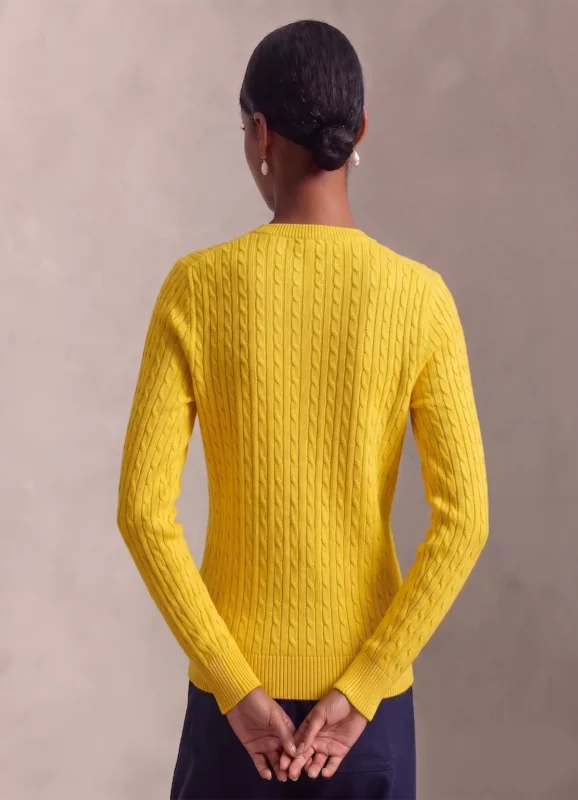
Beyond the fabric and the logo, the assembly of the cardigan reveals the manufacturer’s commitment to longevity.
To streamline your evaluation process, use this comparative breakdown when inspecting any knitwear:
| Feature | Premium Manufacturing Standard | Mass-Market Alternative |
| Embroidery | High stitch count, 3D relief, zero fabric puckering | Flat, vague silhouette, puckered surrounding fabric |
| Knit Density | High tension, immediate shape recovery, crisp cable pattern | Spongy feel, poor elasticity, flat or muddy cables |
| Seam Construction | Fully fashioned, linked stitch-by-stitch | Cut-and-sew, bulky overlocked interior seams |
| Front Placket | Stiff, reinforced, lies perfectly flat | Wavy, sags under button weight |
| Hardware | Corozo, horn, or heavy-weight polished resin | Flimsy, lightweight plastic |
The flawless execution of these details does not happen by accident. In top-tier garment manufacturing, achieving this level of consistency requires an uncompromising approach to quality assurance. Garments of this caliber are typically subjected to extensive oversight, often passing through a stringent 28-step inspection protocol before leaving the facility. Every element—from the microscopic alignment of the horse’s reins to the millimeter tolerance of the buttonhole placement and the specific gravity of the yarn—is verified.
Ultimately, evaluating a cardigan sweater ralph lauren requires a shift in perspective. You are not simply looking at a piece of clothing; you are inspecting the output of a highly calibrated supply chain. By understanding the mechanics of high-density knitting and precision embroidery, you can easily separate authentic craftsmanship from superficial imitations, ensuring your investment yields a garment that will perform beautifully for decades.

 EN EN
EN EN  ES
ES
 FR
FR
 DE
DE