
In the summer apparel market, linen represents the ultimate paradox. On the surface, a fast-fashion linen blouse and a premium counterpart may look identical on a hanger. Yet, after a single wash and a day of wear, the disparity becomes glaringly obvious. The cheap garment turns into a stiff, warped, and scratchy disaster, while the premium piece only grows softer, maintaining its effortless drape.
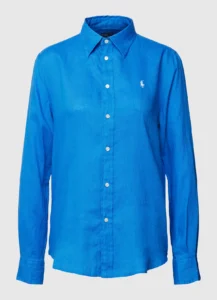
When analyzing a benchmark standard in this category—specifically the classic linen shirt women Ralph Lauren produces—the premium price tag is rarely a matter of mere brand markup. Instead, it is a direct reflection of invisible, highly technical post-production engineering.
For industry insiders, the true gap between a $30 linen shirt and a $200 one does not lie solely in the raw flax; it resides in the rigorous, multi-stage garment wash and dimensional stability protocols. Here is a definitive deconstruction of the manufacturing secrets that separate authentic luxury linen from mass-market imitators.
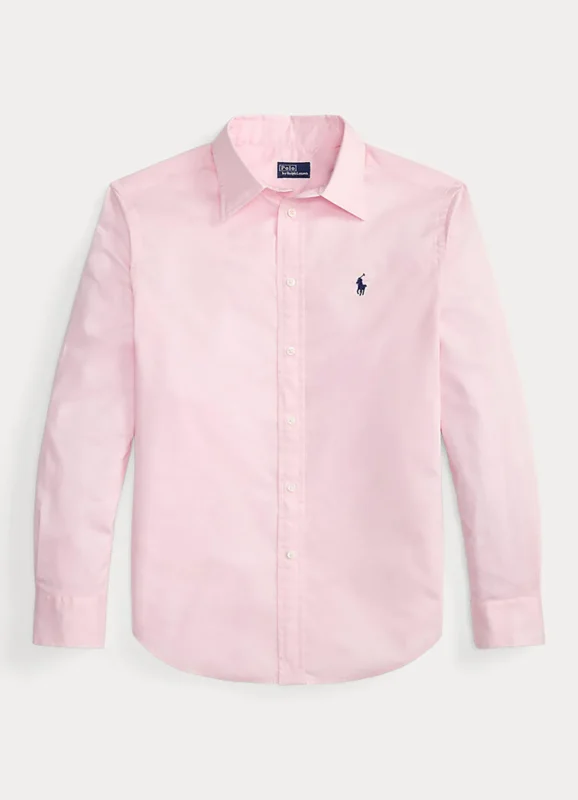
The most common consumer complaint regarding linen is its inherently scratchy texture. Linen fibers contain high levels of pectin, a natural plant glue that makes the raw yarn stiff and abrasive against sensitive skin.
Mass-market manufacturers often skip the necessary, time-consuming wash treatments to cut costs. They apply a temporary chemical softener to the fabric surface. In the fitting room, it feels acceptable, but the moment the shirt is washed at home, the chemical coating dissolves, revealing the harsh, unprocessed flax fibers beneath.
The superior hand-feel of a premium linen shirt is achieved through a controlled, industrial Garment Wash (成衣水洗) process.
Linen’s natural enemy is hydrostatic tension (water) combined with heat. Left untreated, pure linen fabric can suffer a shrinkage rate of up to 10% after its first encounter with a washing machine. For a tailored women’s shirt, even a 4% shrinkage across the chest or shoulders ruins the fit entirely.
The secret to a garment that retains its architecture lies in rigorous pre-shrinking and tensionless finishing long before the fabric is ever cut.
Linen has virtually zero elasticity. This rigid physical property makes it notoriously difficult to sew cleanly. In fast-fashion factories where speed is prioritized over precision, high-speed sewing machines pull the non-stretch linen through the feed dogs too aggressively.
This results in seam puckering (骨位起皱)—unsightly, permanent ripples along the placket, collar, and side seams that no amount of ironing can flatten.
The final percentage of the cost is dedicated to the micro-components that stabilize the garment.
The distinction between a disposable summer top and a foundational wardrobe staple lies entirely in what happens behind the factory doors. The appeal of the classic linen shirt women Ralph Lauren aesthetic is not just about a logo or a silhouette; it is about the guarantee of applied textile science.
When you invest in premium linen, you are not simply buying the raw material. You are paying for the extensive enzyme washes, the rigorous pre-shrinking protocols, and the precision sewing that ensures the garment remains as immaculate on its fiftieth wear as it was on its first. In the realm of classic, “Old Money” style, true luxury is always defined by longevity.


 EN EN
EN EN  ES
ES
 FR
FR
 DE
DE