ralph lauren indigo cardigan is a color-driven search. Customers want depth, character, and a blue tone that feels richer than basic navy. Indigo can be beautiful, but dye control is critical. Poor colorfastness, uneven panels, or dye transfer can turn a strong product into a return problem.
Before bulk production, the supplier should confirm shade standard, rubbing fastness, washing response, shrinkage, pilling risk, and trim compatibility. A dark blue reference such as Ralph Lauren womens navy blue cable-knit button-up cardigan sweater helps customers compare how rich color appears on a cardigan front, but indigo needs extra attention because the shade may change with handling.
Dyeing can affect fabric hand and fit. The sample should be measured before and after steam or wash testing, then reviewed on body. Shoulder balance, sleeve pitch, front opening, placket flatness, and hem recovery should remain stable. If indigo fabric stiffens or relaxes too much, pattern adjustments may be needed.
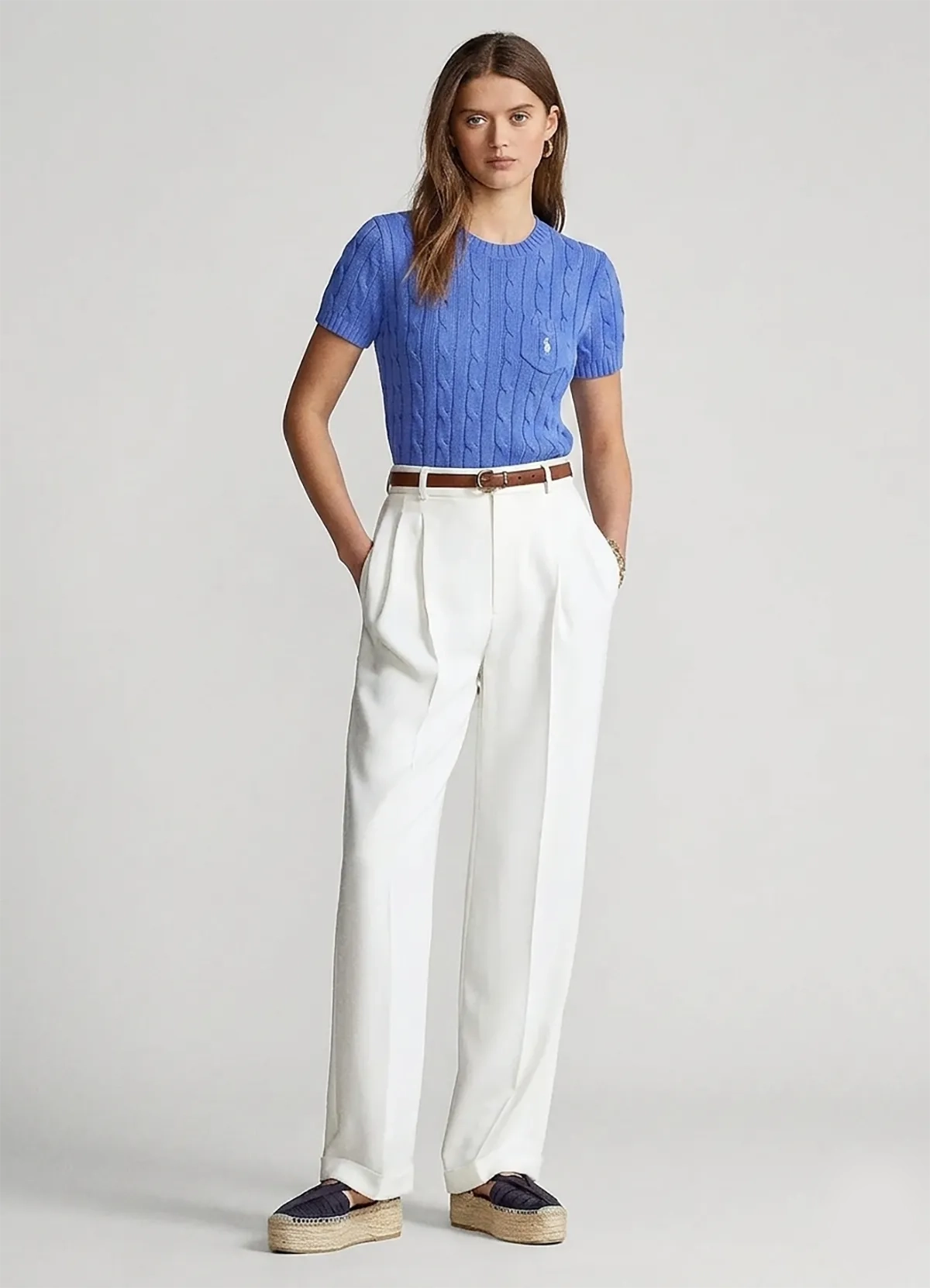
Product photography should not over-saturate the color. Customers need to know whether the cardigan is dark indigo, washed indigo, or a cleaner blue. A lighter internal comparison such as Polo Ralph Lauren blue cotton sweater with short sleeve helps buyers see blue tone differences across products.
Final QC should include shade consistency, dye transfer risk, stains, lint, loose yarns, sleeve twist, button pull, buttonholes, placket flatness, measurements, labels, and protective packing. For warm color contrast, Polo Ralph Lauren autumn yellow cable-knit polo shirt is another useful reference. Indigo succeeds when color beauty and technical control arrive together.
For ralph lauren indigo cardigan, the approved sample should be treated as a production document, not only a sales photo. The file should include fabric standard, trim card, size sheet, pattern comments, fit photos, label placement, care instruction, and packing method. These records help the factory keep the same result when the order moves from sample room to bulk line.
A good garment factory does not wait until final inspection to discover problems. The first finished pieces should be checked against the approved sample before the line runs at speed. Measurements, front balance, sleeve pitch, surface cleanliness, trim position, and pressing result should be corrected early. This saves fabric, protects delivery time, and gives the customer a more stable result.
Before placing an order, buyers should ask for recent real-product photos, a measured sample sheet, and the main QC checklist used before packing. This is especially useful for online cardigan purchases because fabric hand, shade, sleeve comfort, and front balance are difficult to judge from one image. Clear supplier communication reduces returns and makes repeat orders easier.
Packing is part of quality, especially for knitwear. A cardigan can leave the sewing line clean and still arrive with deep fold marks, lint, crushed buttons, or a stretched hem if the folding method is wrong. The packing team should test polybag size, tissue position, carton pressure, and label placement before shipment. Customers notice the condition of the first garment they open.
For repeat orders, the supplier should keep a simple but complete production record: yarn or fabric source, shade card, trim reference, pattern comments, inspection photos, measurement tolerance, and packing method. These details help the next batch match the first one. They also make communication faster when the customer needs a new color, adjusted size, or similar cardigan style later.
Customers do not need to inspect a factory to make a better decision. They can look for clear fabric descriptions, real garment photos, visible trim details, useful measurements, and wording that explains production instead of hiding behind style phrases. When a page gives practical evidence, the buyer can compare quality more confidently and choose the cardigan that fits the intended use, budget, season, and delivery expectations.
A Shenzhen garment supplier should connect every product promise with a measurable production point. Softness needs fabric approval. A clean shape needs pattern notes. Reliable color needs shade control. Secure trims need pull testing. Careful packing needs a tested fold method. When those details are handled together, the customer receives a cardigan that matches the page and feels trustworthy in daily wear.
The final standard is consistency. The photo, sample, bulk garment, and delivered piece should match in shade, fit, surface cleanliness, trim security, and overall hand feel. That consistency is what makes a cardigan useful to customers and valuable to a clothing business. It also gives buyers a clearer reason to reorder from the same supplier instead of starting the sourcing process again from zero again, which is especially important for small-batch apparel production orders.
 EN EN
 ES
 FR
 DE